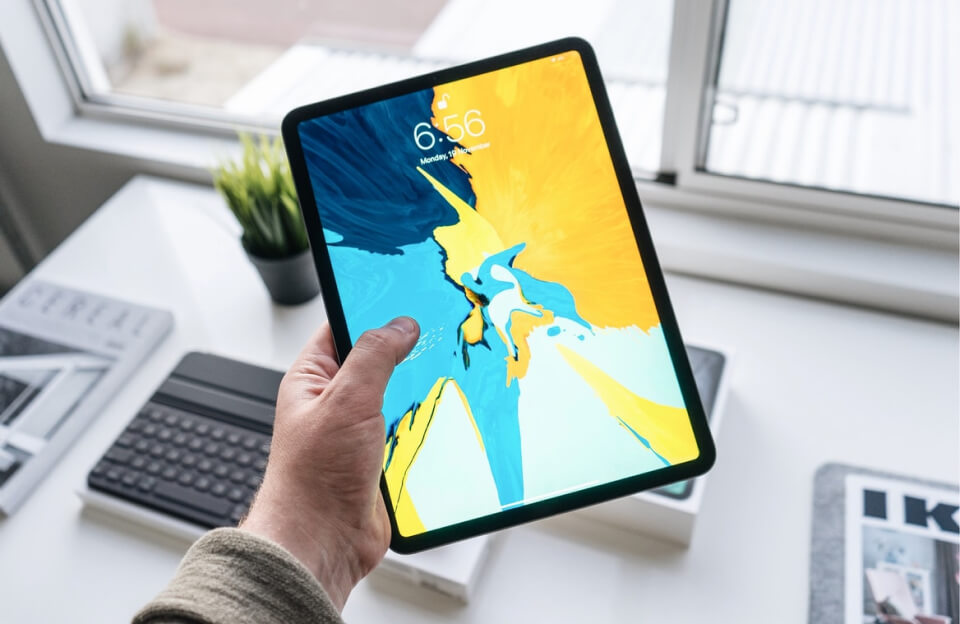
iPad Pro M1 Chip: Bringing The MacBook Pro Power
Apple didn’t just upgrade a tablet when it launched the iPad Pro with the M1 chip. It blurred the line between tablets and laptops.
For years, tablets felt like “light devices.” Great for media, decent for work—but not powerful enough to replace a laptop. The M1 iPad Pro changed that narrative almost overnight.
Let’s break down what makes this device special, what it gets right, and where it still holds back.
Meet the Powerhouse: iPad Pro M1
Best overall
iPad Pro 11″ M1 Chip
₹71,900•Aptronix – Apple Premium Reseller, Logix Mall, Noida
₹71,900•Aptronix – Apple Premium Reseller, Logix Mall, Noida
When Apple added the M1 chip—the same processor used in MacBook Air and MacBook Pro—it wasn’t just a spec bump. It was a statement.
The M1 brings:
- 8-core CPU
- 8-core GPU
- 16-core Neural Engine
That’s not tablet-level hardware. That’s laptop-class performance.
According to Apple’s official announcement, the M1 iPad Pro offers up to 50% faster CPU performance and 40% faster GPU performance compared to previous models.
In simple terms: this thing flies.
What Makes the M1 Chip So Powerful?
The M1 chip uses a unified memory architecture. That means CPU, GPU, and Neural Engine share the same memory pool.
Why does that matter?
- Faster data access
- Better multitasking
- Improved efficiency
Even the base models come with 8GB RAM, while higher storage versions go up to 16GB RAM.
That’s serious power for a tablet.
You can edit 4K videos, run heavy apps, or multitask without watching your device struggle.
Performance: Real-World Experience
Specs sound impressive. But how does it feel?
In real-world use, the iPad Pro M1 handles:
- Video editing (Final Cut alternatives, LumaFusion)
- Graphic design (Procreate, Adobe apps)
- Gaming (high-end titles with ease)
- Multitasking (split screen, Stage Manager)
Even users on forums like Reddit often mention that M1 performance feels “more than enough” for everyday tasks and even creative work.
“Performance wise, M1 is more than enough… didn’t encounter any hiccups.”
That sums it up nicely.
Display: Where the Magic Happens
The iPad Pro doesn’t just rely on raw power. It pairs that power with one of the best displays in its class.
- 11-inch Liquid Retina display
- 120Hz ProMotion refresh rate
- Wide color (P3)
- True Tone technology
If you choose the 12.9-inch model, you get the Liquid Retina XDR display with Mini-LED technology. That brings:
- Higher brightness
- Better contrast
- Deeper blacks
It’s not just good—it’s professional-grade.
MacBook Power… But Is It a MacBook Replacement?
Here’s the honest answer: not completely.
Yes, the hardware matches MacBooks. But software still limits the experience.
What it does well:
- Touch-first interface
- Apple Pencil support
- Portability
- Instant-on performance
Where it struggles:
- File management (still not as flexible as macOS)
- Some pro apps are limited versions
- External monitor support (improving, but not perfect)
Apple introduced features like Stage Manager to improve multitasking. It brings a more desktop-like experience to iPadOS, but it’s still evolving.
So yes, it can replace a laptop for many users—but not all.
Design and Portability
Apple didn’t change the design much—and that’s a good thing.
The iPad Pro remains:
- Thin (just 5.9 mm)
- Lightweight (~466g for 11-inch)
- Premium build
You can carry it anywhere without thinking twice. Try saying that about a 16-inch laptop.
Connectivity and Extras
The M1 iPad Pro also supports:
- Thunderbolt / USB 4
- 5G connectivity (on cellular models)
- Apple Pencil (2nd gen)
- Magic Keyboard
Thunderbolt support is a big deal. It allows faster data transfer and connection to external devices.
That pushes the iPad even closer to a desktop-class machine.
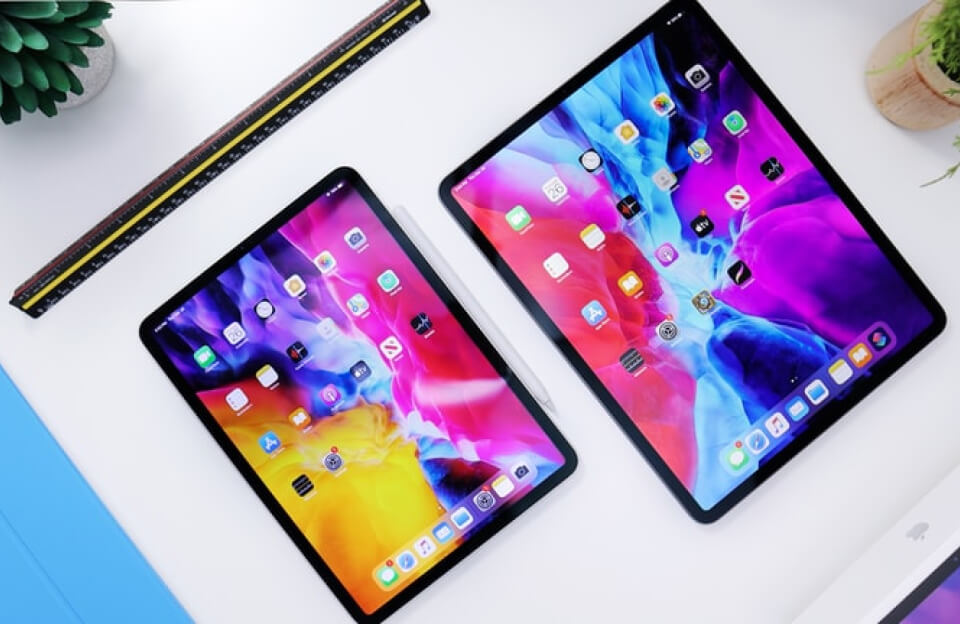
iPad Pro M1 vs 12.9-inch Variant
iPad Pro 12.9″ M1 Chip · ₹99,900
A larger version with Mini-LED display, ideal for professionals who need a bigger canvas.
If you’re choosing between sizes, here’s the quick logic:
- 11-inch → portable, easier to carry
- 12.9-inch → better for creative work and multitasking
Both use the same M1 chip. Performance stays identical.
The real difference? Screen experience.
PRODUCT COMPARISON TABLE
| Feature | iPad Pro 11″ M1 Chip₹71,900•Aptronix – Apple Premium Reseller, Logix Mall, Noida | iPad Pro 12.9″ M1 Chip₹99,900•Apple Premium Reseller – Aptronix – Galleria Market DLF Phase IV |
|---|---|---|
| Display | Liquid Retina | Liquid Retina XDR (Mini-LED) |
| Screen Size | 11-inch | 12.9-inch |
| Chip | Apple M1 | Apple M1 |
| RAM | 8GB / 16GB | 8GB / 16GB |
| Portability | Excellent | Moderate |
| Best For | Everyday + portability | Creative professionals |
Who Should Buy the iPad Pro M1?
This device isn’t for everyone—and that’s okay.
Perfect for:
- Designers and artists
- Video editors
- Students who want power + portability
- Professionals who work on the go
Maybe not ideal for:
- Heavy desktop workflows
- Developers needing full macOS tools
- Budget-conscious buyers
If you just browse, watch Netflix, and check emails, this might be overkill.
Pricing and Value
At launch, the 11-inch model started around ₹71,900 in India, while the 12.9-inch version started near ₹99,900.
That places it firmly in premium territory.
But here’s the twist: you’re not just buying a tablet. You’re buying a hybrid device that can handle serious work.
Final Thoughts
The iPad Pro M1 doesn’t try to replace the MacBook. It creates a new category.
It combines:
- Laptop-level performance
- Tablet-level flexibility
- Creative-focused tools
And yes, it occasionally reminds you that software still needs to catch up.
But for many users, that won’t matter.
Because once you experience this level of speed in a device this thin, going back feels… slow.
Quick Verdict
- Performance: ⭐⭐⭐⭐⭐
- Display: ⭐⭐⭐⭐⭐
- Portability: ⭐⭐⭐⭐⭐
- Software flexibility: ⭐⭐⭐⭐☆
Overall: A powerful, future-ready device that brings MacBook-level performance into your hands.

Related Posts

Dogs Do Their Duty for Science

An IoT Failure Worst Nightmare